


Teacher Materials for Our Spanish Reading Program
Aprendo Leyendo includes a complete set of Spanish reading program teacher materials that support direct, explicit, and systematic instruction for Spanish language literacy. Each component is designed to guide the teaching of reading, spelling, and handwriting through structured routines and multisensory practice.
The materials maintain the sequence, coherence, and cultural relevance that characterize the Aprendo Leyendo instructional approach.
What’s Inside for Your Classroom
Aprendo Leyendo teacher materials provide a comprehensive set of instructional resources for every grade level. Each resource contributes to the direct teaching and reinforcement of structured foundational skills and supports ongoing assessment within the instructional framework.
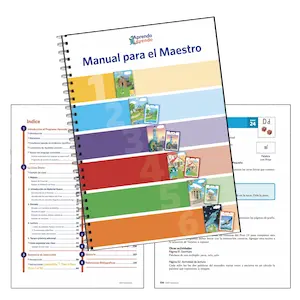
Teacher Handbook, Manual para el Maestro
The Teacher Handbook presents the complete Aprendo Leyendo instructional sequence. It includes lesson plans, dictations, and curriculum-based assessments for every lesson (paso). The handbook provides the framework for direct, explicit, and systematic instruction in reading, spelling, and handwriting across all program levels.
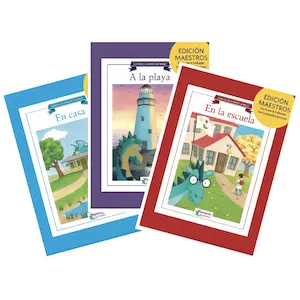
Teacher Editions, Edición Maestros
Each decodable Spanish children’s chapter book (cuentos) includes a corresponding Teacher Edition. Based on Aprendo Leyendo’s structured literacy methodology, they contain prompts and comprehension questions to encourage teachers to use and elicit more sophisticated language discussions than appear in the students’ books. The Teacher Editions provide a model of how to teach reading strategies while at the same time monitoring student comprehension of the text.
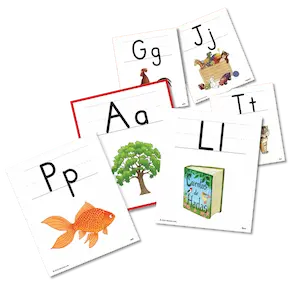
Card Packs, Juegos de Tarjetas
The card packs introduce and reinforce phonemes, syllables, and phonograms included in the Aprendo Leyendo instructional sequence. They form part of the multisensory component of the program and are used daily in whole-class and small-group practice to strengthen phonemic awareness, decoding, and language skills.
Assessments
Aprendo Leyendo provides a variety of opportunities for quantitative and qualitative assessment. All four curriculum based assessments are administered in Spanish. Most notably, students read aloud to teachers each day. This monitored oral reading allows for daily assessment of student learning and enables teachers to adapt instruction as needed. Training on how to administer, assess, and utilize assessment data is provided in Aprendo Leyendo’s Professional Development.

Teacher Resources Center
The Teacher Resource Center is our unique digital platform that provides access to lesson plan templates, dictation sheets, reinforcement and homework activities, assessments, Center Work Activities and supplementary reading materials. All resources are organized by lesson (Paso) and are aligned with the Aprendo Leyendo instructional sequence.
Support Effective Instruction
Each Aprendo Leyendo reading lesson follows five components: Review, Introduction of New Material, Dictation, Reading, and Reinforcement. This sequence is applied consistently across all program levels, ensuring systematic and explicit instruction in reading, spelling, and handwriting through guided practice and immediate feedback.
Instruction progresses from simple to complex concepts, enabling effective scaffolding, modification, and continuous monitoring of learning through oral reading and written work. All skills are practiced and reinforced at each level until they become automatic for students.
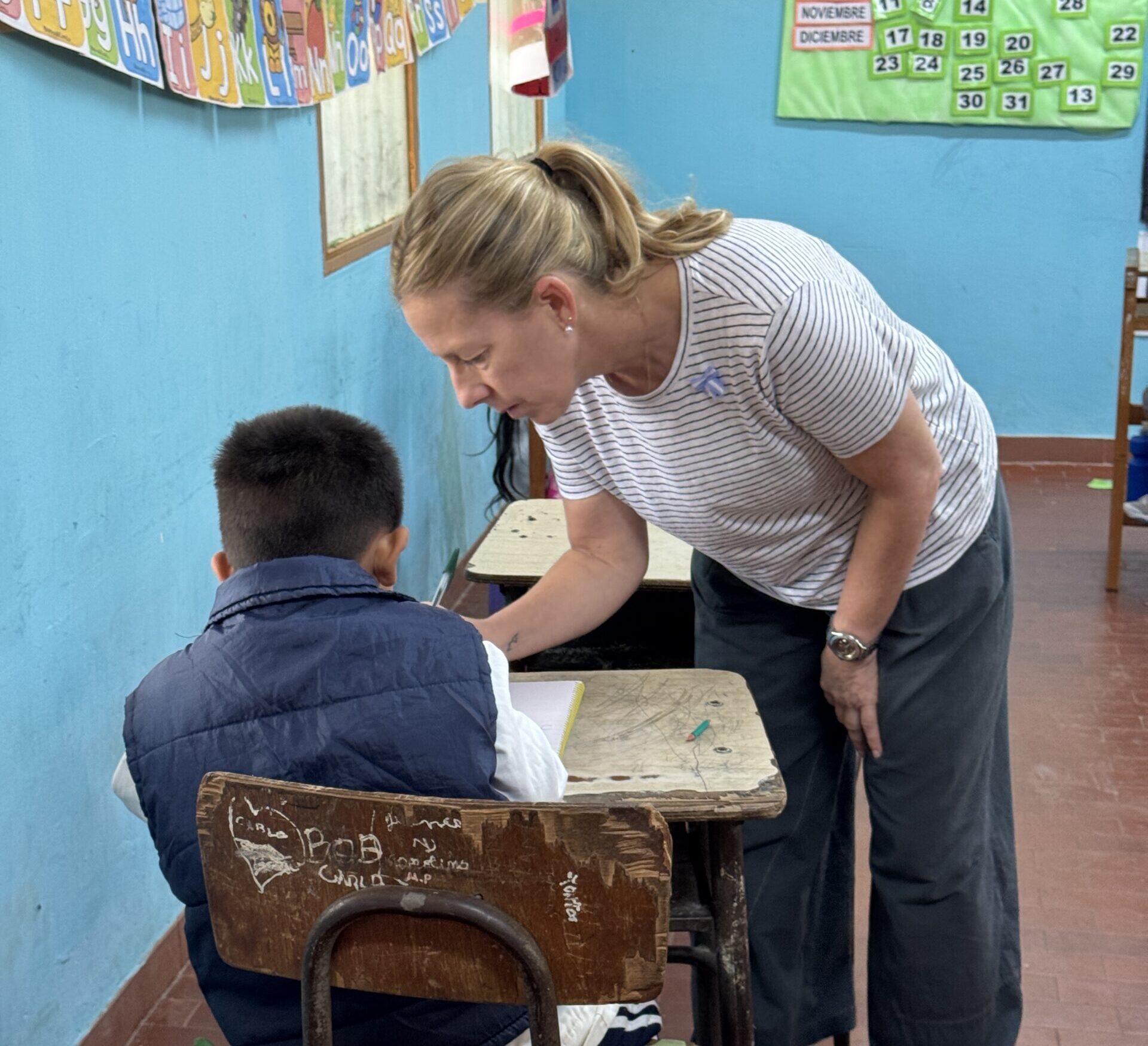
Implementing Evidence-Based Methods Effective Everyday Teaching
Aprendo Leyendo connects the principles of structured literacy and reading research to daily classroom instruction in the Spanish language.
The program integrates phonemic awareness, phonics, vocabulary, spelling, handwriting, and comprehension within a single, coherent sequence. The materials work together to address the literacy skills development of Spanish-speaking students and multilingual learners in both monolingual and dual language settings.
Key instructional components include:
Explicit
& Systematic
Skills are introduced and practiced in a defined scope and sequence in order to support mastery and automaticity.
Multisensory
Instruction
Students engage through visual, auditory, and kinesthetic modalities–linking sound, symbol, and motor response.
Decodable and
Controlled Language
All reading materials include only the sounds and skills that have been explicitly taught in the sequence–promoting accuracy, fluency, and comprehension.
Curriculum-Based
Assessments
Daily skywriting, oral reading, and writing dictations combined with periodic proficiency evaluations provide continuous data to guide pacing and instructional decisions, allowing teachers to modify for all learners. Students engage through visual, auditory, and kinesthetic modalities–linking sound, symbol, and motor response.
What Educators Are Saying
Building a Reader, Building Confidence
“ By mid-year, the student was independently reading… and most importantly, began to identify as a reader. ”
A first-grade student who began the year as a non-reader struggled with letter-sound correspondence and confidence. Using Aprendo Leyendo daily in small group support, the student gained skills step by step—sounding out words, reading sentences, and completing decodable books.
The structured, skill-based approach turned frustration into joy. By spring, the student was reading independently, participating in discussions, and proudly recommending books to classmates.
Result: From non-reader ➝ confident, capable reader with a love for literacy.
—Principal, PS 126
Joyful Routines, Real Growth
“ The curriculum is very clear and easy to follow. It includes a wide range of activities that help support student learning and keep students engaged.”
Students showed excitement and ownership through interactive word work, especially when using dry erase boards to summarize what they read. Engagement grew, comprehension deepened, and confidence soared.
Result: Reading became fun, purposeful, and accessible to all learners.
—Teacher, New York City
From “No Puedo” to Leaders of the Room
“ By spring, the same students who once said ‘I can’t’ had become leaders in the classroom.”
At the start of the year, many students said, “No puedo leer,” or “No sé escribir.” With Aprendo Leyendo’s structured phonics routines, students not only learned to decode and write but also gained confidence that extended beyond literacy—helping them solve math problems, express ideas, and support each other.
By spring, these same students were reading aloud with pride, helping peers, and leading class activities.
Result: A transformation in skills, mindset, and leadership.
—Teacher, PS 16 Q
Support for Students Learning Spanish
“ It was an amazing program to help support students learn spanish.”
—Teacher NYC
Enthusiasm and Daily Reading Habit
“ Me parece muy efectivo el programa y me ayudó mucho en mis clases! ”
Gracias a eso mis alumnos tienen más entusiasmo por la lectura. Se hizo rutina diaria en el grado y un hábito para los alumnos.
—Maestra Argentina
Reading Independently with Better Comprehension
“ Muy conforme con lo aprendido en la capacitación.”
Saber que a través del sonido de las letras ha sido menos complicado enseñar a leer. Y los cuentos para trabajar comprensión lectora son muy buenos, a mis niños les gustaron mucho y pueden leer y comprender solos. Estoy muy feliz.
—Maestra Argentina
Learning at Their Own Pace
“ I really had a great experience, most of my class is on grade or above grade level.”
The program has given students the opportunity to learn at their own pace.
—Teacher NYC
See Our ImpactClassroom Research
Independent research through partnerships with Haskins Global Literacy Hub at the Yale Child Study Center, Yale University, the University of Connecticut, and Universidad de la Ciudad de Buenos Aires documented statistically significant improvements in reading fluency, comprehension, and engagement in classrooms implementing Aprendo Leyendo at scale.
84,000 + Students
Demonstrated measurable gains in fluency and comprehension.
100 % of Teachers
Reported improved outcomes and higher engagement.
1,240 + Schools
Achieved consistent growth in comprehension and vocabulary.
Bring Aprendo Leyendo to Your School!
Empower your teachers with classroom materials that guide structured, research-based Spanish literacy instruction.
Use the links below to request access to teacher resources, explore sample pages, or learn more about Aprendo Leyendo’s professional development opportunities.
Frequently Asked Questions
Are the teacher materials aligned with literacy standards?
Yes, the teacher materials are aligned with literacy standards. Aprendo Leyendo’s Spanish reading program material for teachers follows U.S. benchmarks and is guided by reading research. The teacher materials function in coordination with student materials and curriculum-based assessments to ensure instructional consistency.
What’s included at each program level?
Each level includes the Teacher Handbook, Teacher Editions, Card Packs, curriculum-based assessments, and digital access to the Teacher Resource Center. All teacher materials correspond directly to the cuadernillos and decodable Spanish chapter books, maintaining alignment between instruction, practice, and assessment.
Do you provide professional development for teachers?
Yes, professional development is a core component of Aprendo Leyendo. Teachers receive structured training and ongoing coaching to support the effective use of the materials and the application of the direct instruction model.
Are workbooks effective for teaching Spanish literacy?
Yes, workbooks are effective for teaching Spanish literacy when used with teacher guidance. The cuadernillos are designed for guided use under teacher supervision. They reinforce foundational reading, spelling, and handwriting skills introduced in the lesson sequence. The cuadernillos provide structured practice that complements teacher-led instruction and supports accuracy, fluency, and comprehension.
What’s the best way to teach kids Spanish reading skills?
The most effective approach is explicit and systematic instruction grounded in structured literacy. Aprendo Leyendo applies a direct instruction model that integrates phonemic awareness, phonics, decoding, fluency, vocabulary, and comprehension. Instruction is multisensory, allowing students to see, say, and write each sound as it is taught.
What topics should be taught in Spanish literacy instruction?
Spanish literacy instruction includes phonemic awareness, phonics, decoding, vocabulary development, grammar, spelling, handwriting, and reading comprehension. These topics are taught through culturally authentic texts authored by Latin American writers and supported by a defined instructional sequence.
What do I need to start teaching Aprendo Leyendo?
Implementation begins with professional development and the Teacher Handbooks. Once training is completed, our Aprendo Leyendo team will help schools and teachers create a bespoke order of teacher and student materials. Teachers will also have access to the Teacher Resource Center and the Professional Development Dashboard. These tools provide the necessary resources for lesson planning, instruction, and assessment.
How is AL utilized with the Multi-Tier System of Support (MTSS)?
Aprendo Leyendo is utilized with the Multi-Tier System of Support (MTSS) by working as Tier 1 core instruction in grades K–2 and as Tier 3 intervention in grades K–5. The structured sequence, embedded assessments, and differentiated materials enable schools to address varied literacy needs within a unified instructional framework.